


NAD+ cellular research studies nicotinamide adenine dinucleotide, a coenzyme involved in oxidation-reduction reactions and cellular metabolism. NAD+ is not a peptide. This distinction matters when interpreting mechanisms, product categories, and claims about what laboratory findings mean for human health.
What NAD+ Does in Cells
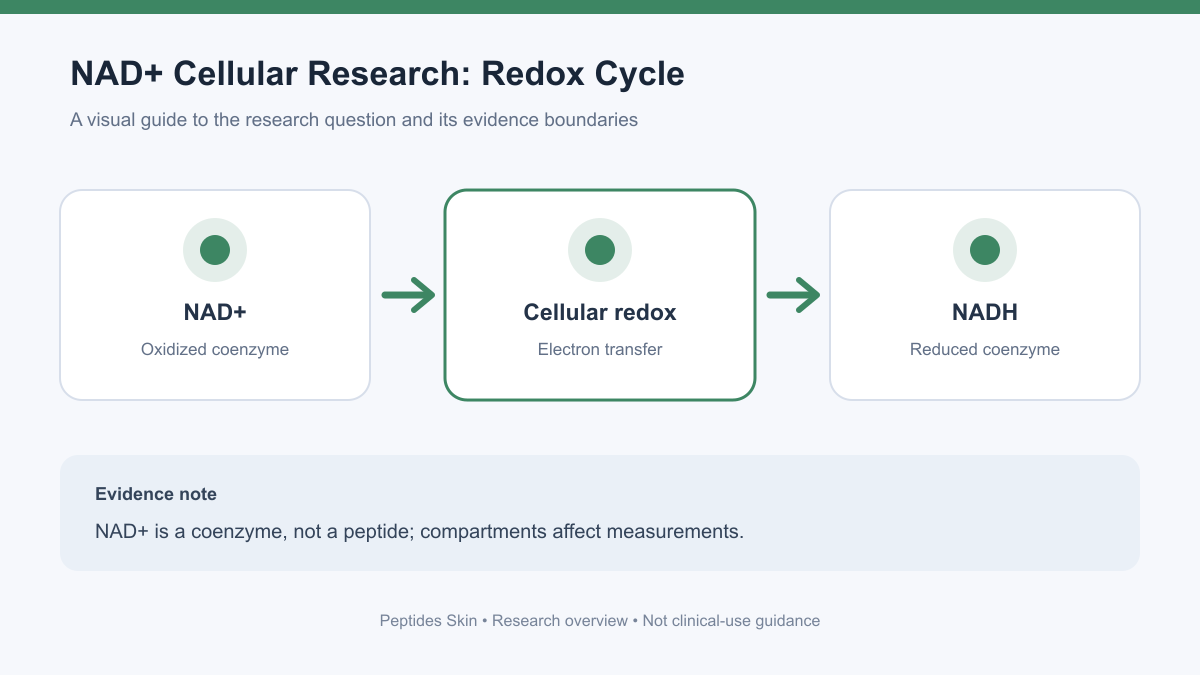
NAD+ accepts and transfers electrons as it cycles with NADH in metabolic reactions. It also serves as a substrate in enzyme families involved in cellular signaling and maintenance. These roles make NAD+ important to basic biology, but they do not make every intervention claim established.
Why NAD+ Is Not a Peptide
Peptides are chains of amino acids linked by peptide bonds. NAD+ is a nucleotide-derived coenzyme with a different chemical structure. A website may discuss both in research contexts, but they belong to distinct molecular categories and should be described accurately.
What Laboratory Research Can Show
Cell and animal studies can examine biochemical pathways, tissue models, and hypotheses. Translating these findings to people requires human studies that measure clinically meaningful outcomes. Biomarker changes should not be presented as proof of broad anti-aging or therapeutic effects.
Evaluating Human Evidence
Review the study population, intervention, comparator, duration, endpoints, and adverse-event reporting. Distinguish oral precursors, administered NAD+, and other interventions; evidence for one is not automatically evidence for another. The exact intervention must match the claim being assessed.
Frequently Asked Questions
Is NAD+ a peptide?
No. It is a coenzyme, not an amino-acid chain.
Does a cellular role prove a health benefit from supplementation?
No. That requires direct human outcome evidence for the specific intervention.
Are NAD+ and NADH the same form?
They are related redox forms that interconvert during cellular reactions.
References
Explore our Peptides Skin research resources for evidence-reading guidance.
Catalog context: For a current catalog reference related to cellular redox research, review the NAD+ research reagent catalog record for listed formats and research-use-only documentation. Availability and documentation may change, so match the exact product record to the applicable laboratory workflow.