The FDA peptide advisory committee 2026 meeting discussed several peptide-related bulk drug substances at its July 23–24 session. Reports said the panel recommended BPC-157 for inclusion on a compounding list.…
BPC-157 human studies remain limited, despite broad online claims about recovery, tissue repair, and gut health. The clearest question is narrower: what has actually been studied in people? First, the…
HPLC vs LC-MS peptide analysis compares two methods that answer different questions. HPLC separates components and can estimate relative purity under a defined method. Mass spectrometry provides information about molecular…
A certificate of analysis (COA) summarizes selected analytical results for a sample or production lot. To read one carefully, match the document to the material, identify what each test measured,…
A research guide to retatrutide pharmacokinetics, exposure measures, half-life, and the limits of concentration-time data.
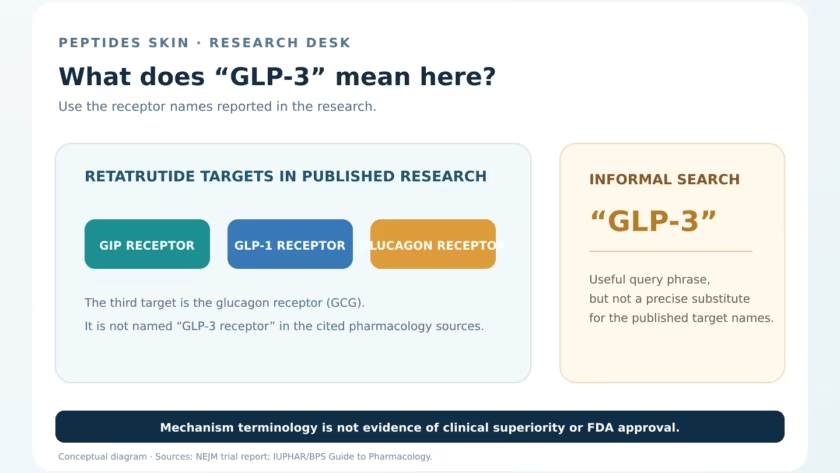
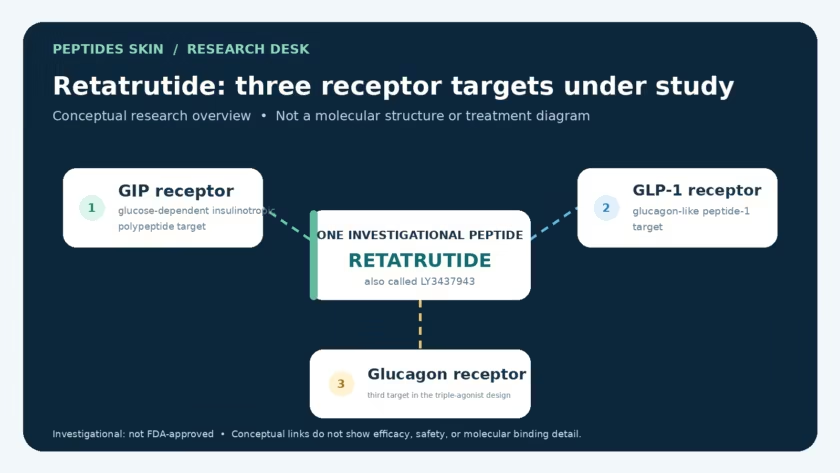
A research terminology guide explains why “GLP-3” is an imprecise online label and identifies retatrutide’s published GIP, GLP-1, and glucagon receptor targets.
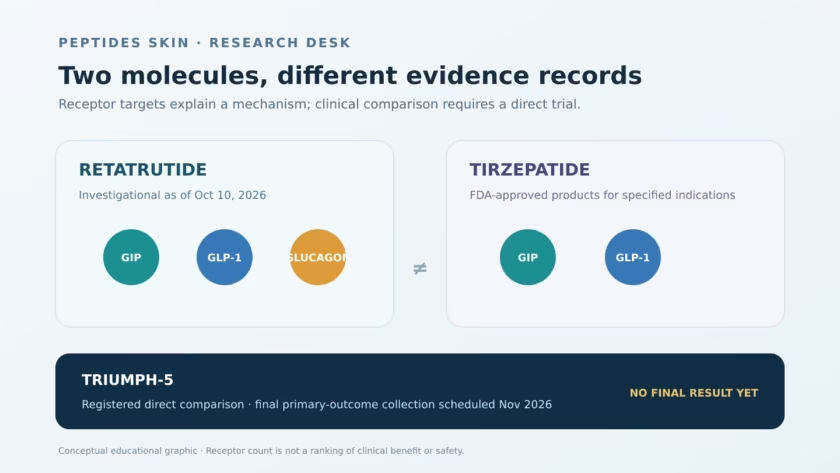
Compare retatrutide and tirzepatide research, receptor targets, FDA status, and the registered TRIUMPH-5 head-to-head study without overstating cross-trial results.
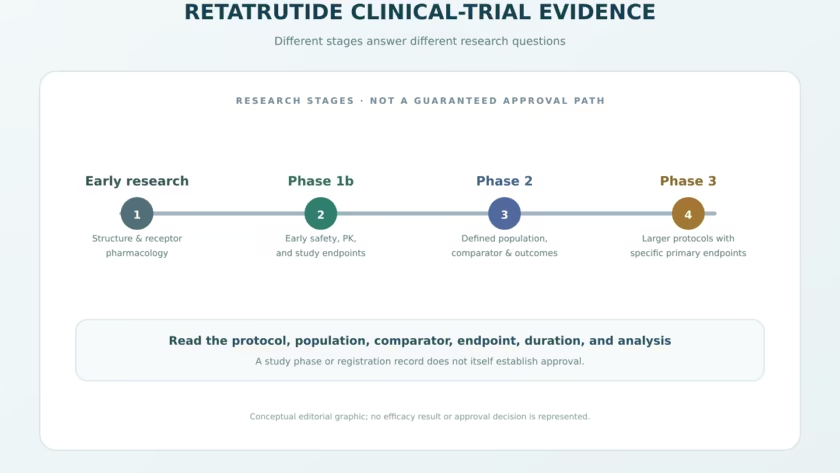
A research guide to retatrutide clinical trials, Phase 1b through Phase 3, protocol endpoints, sponsor announcements, and the limits of trial evidence.
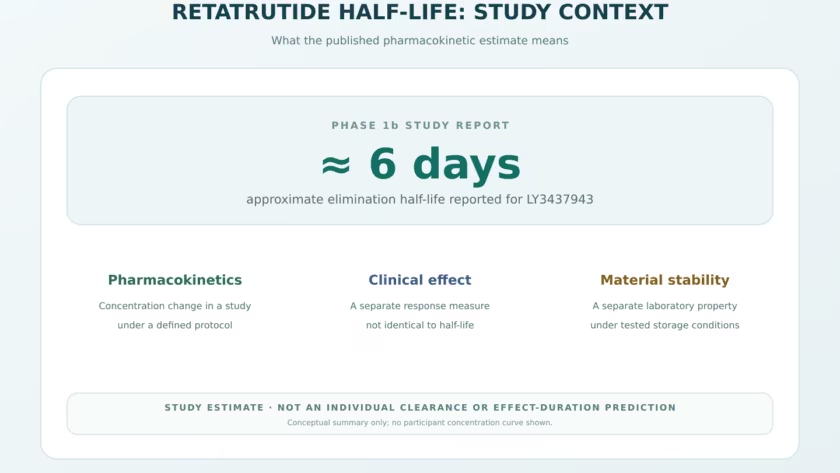
Published retatrutide research reports an approximate six-day half-life. Learn what that pharmacokinetic estimate means—and what it cannot tell you about effect duration or product stability.
Explore retatrutide’s GIP, GLP-1, and glucagon receptor activity, the evidence from structural and clinical studies, and its investigational status.
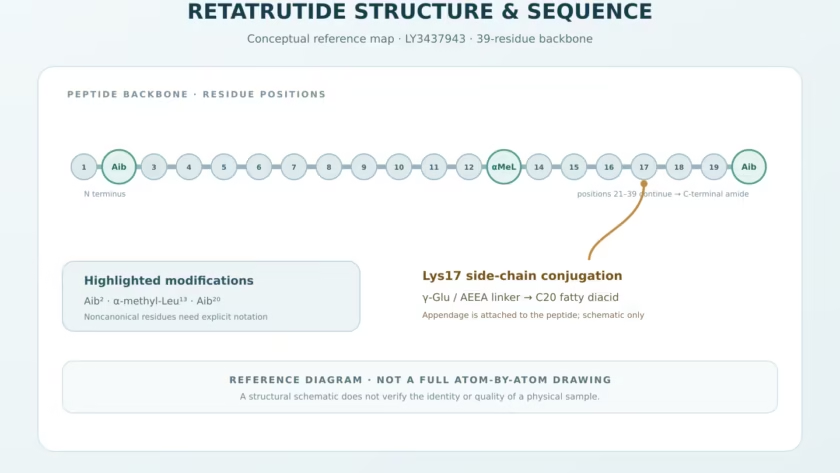
A research reference to retatrutide’s 39-residue backbone, key modifications, lipid-linker attachment, and chemical-record differences.
A research-focused introduction to retatrutide (LY3437943), its three receptor targets, published clinical research, and current FDA status.