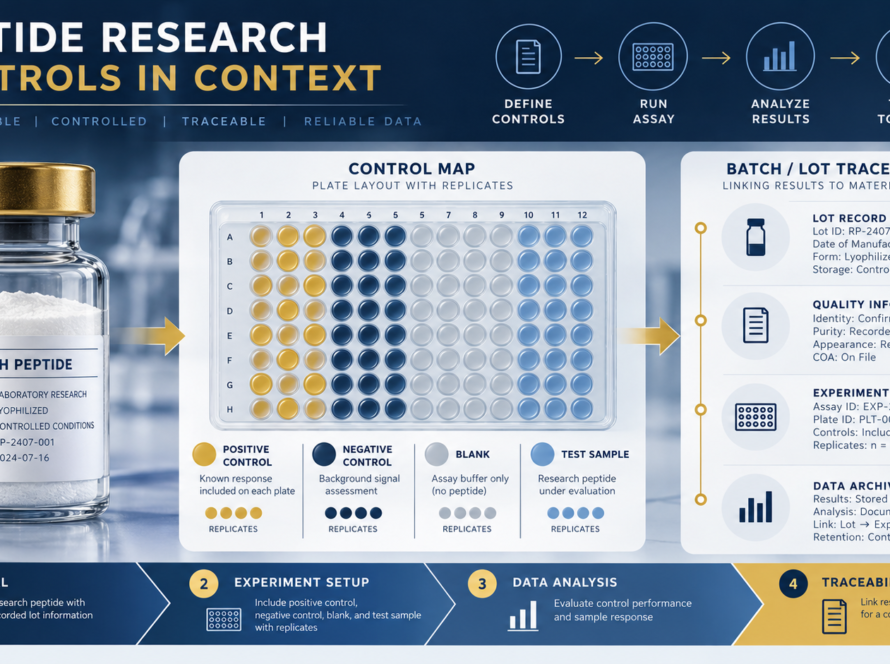


Short answer: Buffer and matrix effects can change peptide retention, ionization, recovery, and apparent signal intensity. A defensible laboratory interpretation records the sample matrix, buffer composition, preparation steps, instrument conditions, and reference comparison instead of assuming that every signal change reflects the peptide itself.
What matrix effects mean in peptide analysis
A matrix is everything in the prepared sample other than the target analyte. It can include salts, counterions, residual solvents, excipients, stabilizers, surfactants, biological components, or material introduced during preparation. These components may change chromatographic interactions or suppress and enhance ionization in mass spectrometry.
Why buffer composition matters
pH, ionic strength, volatile additives, organic solvent content, and counterions can influence peptide charge state and interactions with a stationary phase. Small changes may shift retention, broaden peaks, alter recovery, or affect the relative response of modified forms. Record the exact composition, preparation date, filtration, and storage conditions for each buffer used in a comparison.
Chromatographic effects
Retention and peak shape
Changes in pH or ionic strength can alter the balance between peptide and stationary-phase interactions. Peak shape may also be affected by injection solvent mismatch, overload, adsorption, temperature, or column history. Compare system suitability and reference material before attributing a new shoulder or shift to a sample difference.
Recovery and adsorption
Peptides may adsorb to vials, tubing, filters, or other surfaces depending on concentration, material, pH, and solvent. A low recovery result is not automatically degradation. Use appropriate recovery checks, matched containers, and documented contact times when adsorption is plausible.
LC-MS response effects
Nonvolatile salts and other matrix components can suppress or enhance electrospray response. A stable chromatographic peak with a lower MS response may therefore reflect ionization conditions rather than a change in amount. Record source settings, dilution, injection volume, carryover checks, and the comparison standard. Interpret mass-to-charge signals together with chromatographic and preparation evidence.
Designing a matrix-effect check
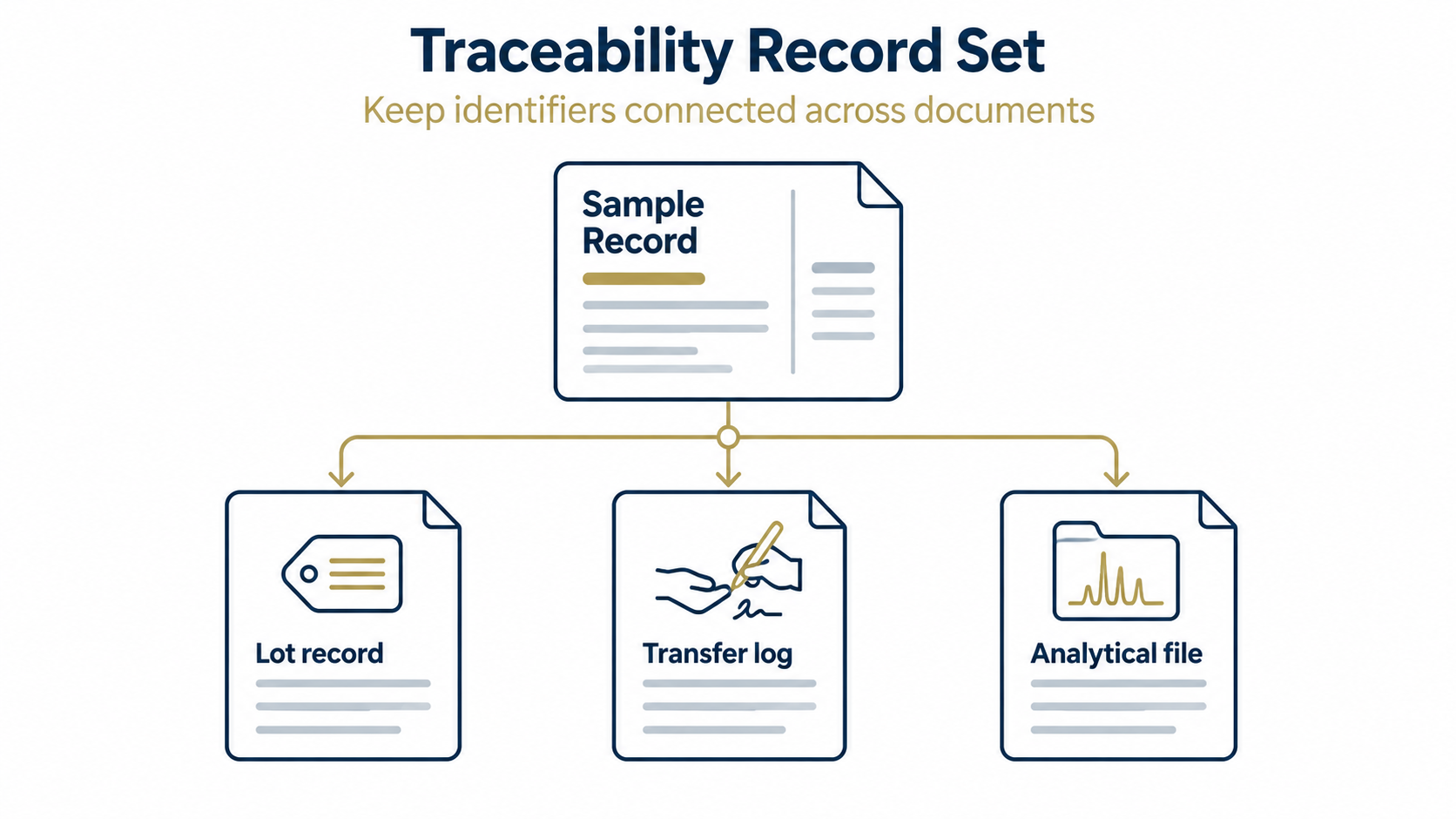
Define the comparison before testing. Options include neat reference versus matrix-matched reference, post-extraction addition, dilution linearity, recovery checks, or an orthogonal method. The choice depends on the claim and platform. Include blanks, controls, replicate preparations, and a documented acceptance rationale where applicable.
How to document unexpected signals
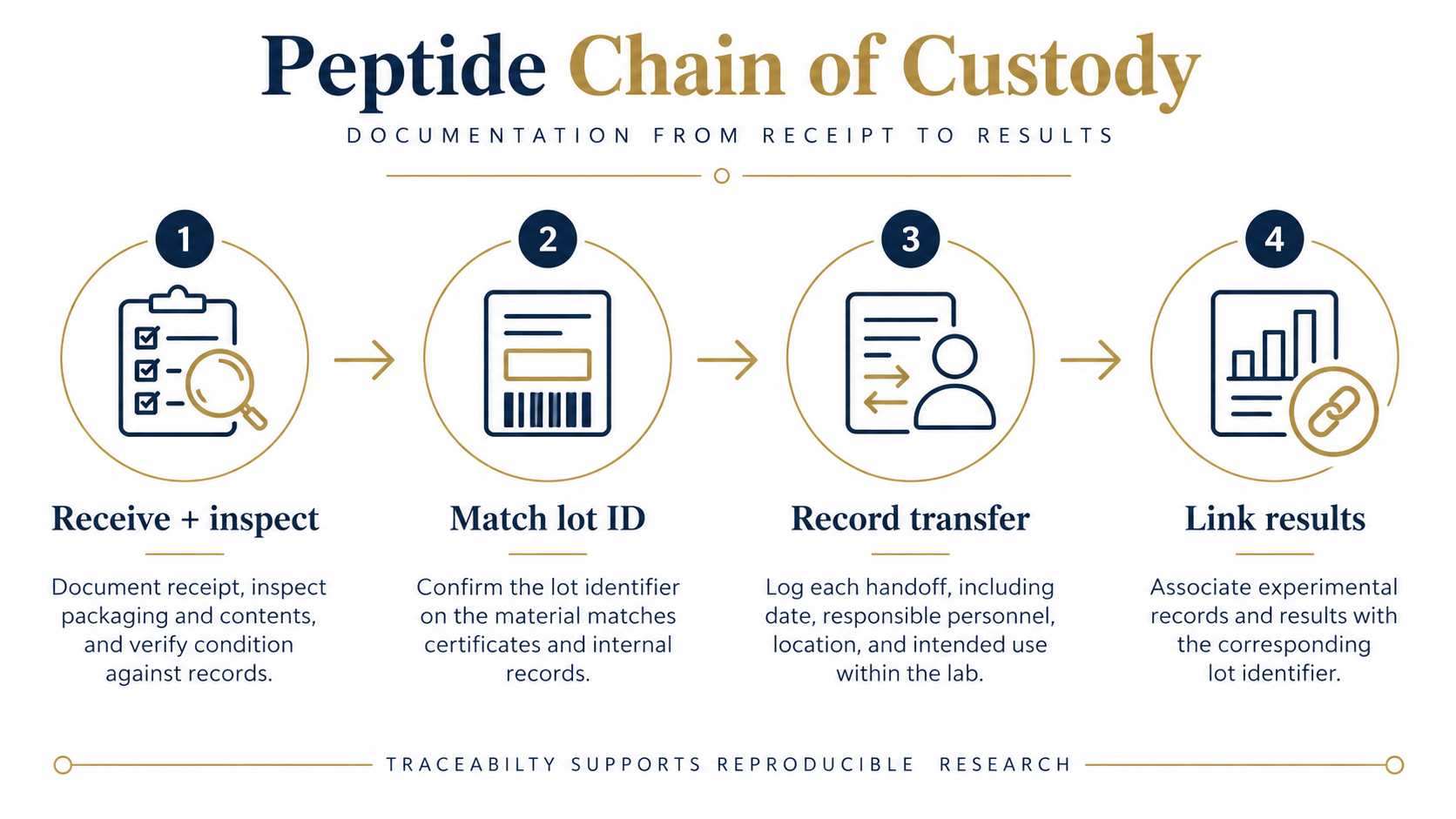
When a signal changes, preserve raw data, sample identifiers, buffer lot, instrument log, sequence order, and preparation notes. Check for carryover, integration changes, column conditioning, calibration status, and sample age. A structured deviation record should distinguish observation from hypothesis and identify follow-up work.
Related Peptides Skin resources
Read orthogonal identity confirmation, sample preparation and adsorption documentation, and controls and traceability.
Frequently asked questions
Can a buffer change peptide identity?
A buffer can change the observed analytical behavior without changing the underlying identity claim. Interpretation requires method and preparation context.
What is ion suppression?
Ion suppression is reduced mass-spectrometric response caused by co-eluting matrix components competing during ionization.
Does a lower peak always mean degradation?
No. Adsorption, dilution error, injection variation, integration, and matrix effects can also change a measured signal.
How should laboratories compare matrices?
Use a predefined design such as matrix-matched reference, recovery, dilution, or post-addition comparison with documented controls.
Why keep buffer lots recorded?
Lot records support traceability and help identify whether a change followed a reagent or preparation change.
What does this article exclude?
It excludes dosing, administration, treatment, diagnosis, and personal-use instructions.
Research-use-only boundary
For laboratory research and educational purposes only. Not for human or veterinary use.
Sources
- ICH quality guidelines.
- FDA pharmaceutical quality resources.
- EMA synthetic peptide guideline.
- NIH/NLM PubMed Central.
Editorial evidence and source review
How this article was prepared: Peptides Skin Editorial reviewed the topic against the linked primary literature, standards, and official sources available on 26 October 2026. The article separates measured observations from proposed mechanisms and inference. Conclusions apply only to the material, model, method, and conditions described here.
Evidence boundary: A research result, certificate, analytical signal, or preclinical finding should not be generalized to a different batch, formulation, study population, or personal-use context. Readers should consult the original source for its full methods and limitations.
Primary and authoritative source pathways
- FDA bioanalytical method validation guidance
- PubMed: peptide matrix-effects research
- ICH quality guidelines
Editorial scope: this page is for laboratory research education and does not provide medical, dosing, administration, treatment, diagnosis, or personal-use instructions.