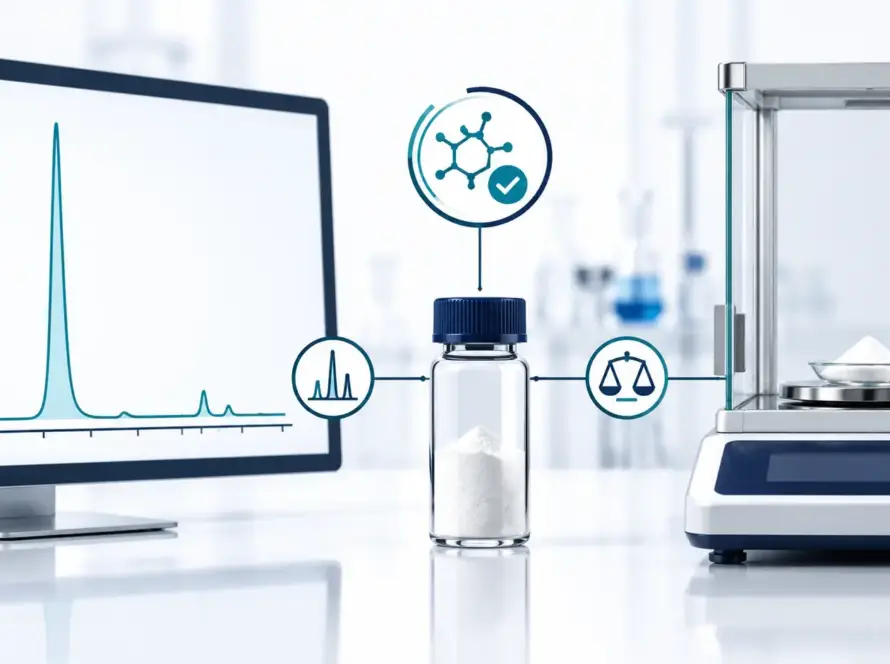


Short answer: Peptide data integrity means that research records remain attributable, legible, contemporaneous, original or a verified copy, and accurate throughout their lifecycle. For peptide studies, this includes sample identifiers, raw instrument files, calculations, versions, deviations, and approvals. A polished final table is not enough if the underlying record cannot be reconstructed.
What data integrity covers in peptide research
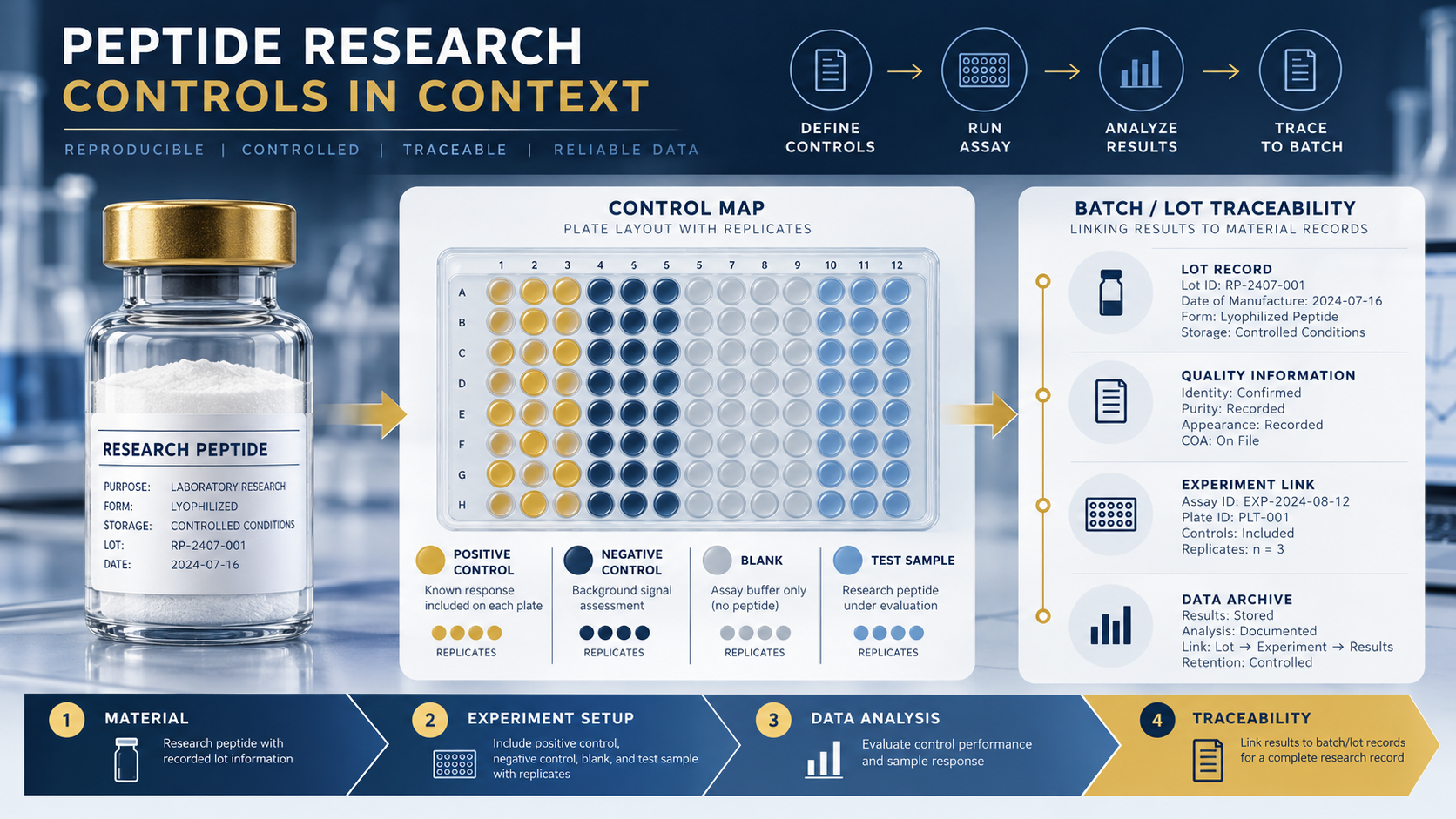
Integrity applies to notebooks, electronic files, chromatograms, mass spectra, spreadsheets, calculations, images, COAs, sample labels, and reports. It covers creation, review, transfer, storage, correction, and retention. The objective is not more paperwork for its own sake; it is the ability to reconstruct what was done, by whom, with which material, using which method and version.
Start with identifiers and chain of custody
Use stable identifiers for the study, sample, lot, container, instrument run, method, and report. Record transfers, aliquots, storage events, and disposition. When a file is exported or converted, preserve the source and document the transformation. A clear identifier scheme reduces the risk of mixing lots or attaching a result to the wrong material.
Audit trails and original records
Electronic systems should retain creation and modification history where available. Review audit trails according to risk and procedure, especially for integrations, deleted values, reprocessing, reintegration, and changes to calculations. If a platform does not provide a suitable audit trail, add controlled exports, access records, and contemporaneous review notes rather than assuming that a final PDF is the original record.
Version control for methods and calculations
Method versions
Give each method a unique version and effective date. Link the run to the method actually used, not merely the current method. When parameters change, record the reason, impact assessment, and approval. This prevents a later reader from applying current settings to an older result.
Calculation and spreadsheet controls
Protect formulas, identify input cells, record units and dilution factors, and keep a controlled master copy. Review calculations independently when the result informs an important decision. Preserve the raw export and any transformed dataset so the reported value can be reproduced.
Corrections, deviations, and exceptions
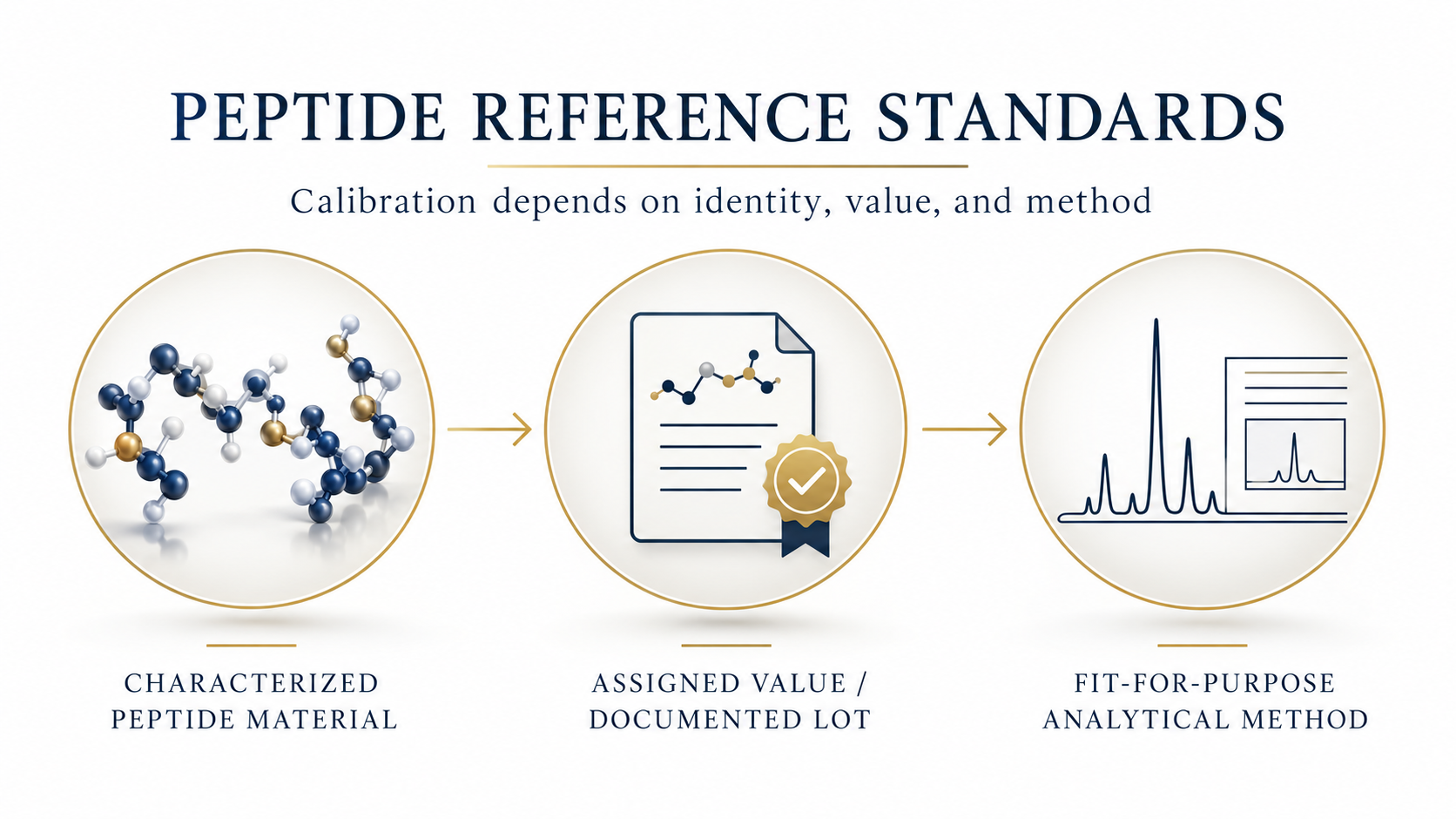
Correct records transparently: keep the original value visible, enter the corrected value, date and initial the change, and state the reason. For electronic records, use the system’s controlled correction function. Deviations should link to the affected sample, run, method, and impact assessment. Never backdate a record or silently replace a file.
Review and reproducibility checks
A second reviewer should be able to locate the raw record, follow the calculation, identify the method and reference material, and understand the conclusion without relying on undocumented memory. Periodic checks can sample studies for missing metadata, broken links, unprotected formulas, duplicate identifiers, and unreviewed changes.
Related Peptides Skin resources
Use the controls and traceability article, identity evidence guide, and method validation guide when building a documented workflow.
Frequently asked questions
What is the most important data-integrity control?
Maintaining a traceable original record linked to the correct sample, method, calculation, and reviewer is a strong foundation.
Can a PDF be the original data?
Usually a PDF is a report or export. The underlying raw file and relevant metadata should be retained when they are needed to reconstruct the result.
How should a spreadsheet correction be made?
Keep the original value, document the reason and date, protect formulas, and preserve the prior version according to the laboratory procedure.
Why record method versions?
Method versions show which parameters produced a result and prevent later readers from confusing old and current procedures.
What should an audit-trail review look for?
Review changes that affect data selection, integration, calculations, reprocessing, deletions, and report generation, using a risk-based procedure.
What does this article exclude?
It excludes dosing, administration, treatment, diagnosis, and personal-use instructions.
Research-use-only boundary
For laboratory research and educational purposes only. Not for human or veterinary use.
Sources
- FDA pharmaceutical quality resources.
- ICH quality guidelines.
- EMA synthetic peptide guideline.
- NIH/NLM PubMed Central.
Editorial evidence and source review
How this article was prepared: Peptides Skin Editorial reviewed the topic against the linked primary literature, standards, and official sources available on 26 October 2026. The article separates measured observations from proposed mechanisms and inference. Conclusions apply only to the material, model, method, and conditions described here.
Evidence boundary: A research result, certificate, analytical signal, or preclinical finding should not be generalized to a different batch, formulation, study population, or personal-use context. Readers should consult the original source for its full methods and limitations.
Primary and authoritative source pathways
Editorial scope: this page is for laboratory research education and does not provide medical, dosing, administration, treatment, diagnosis, or personal-use instructions.